After missing the November meeting (and, more importantly, the accompanying dinner), I was particularly keen to make it down to London for the March gathering of the Viking Society for Northern Research. It felt, in many ways, like a return—not just to the Society itself, but to a more active engagement with the academic world that I’ve had to step back from slightly in recent months.
I travelled down with friends from Nottingham, including a fellow council member who also works on Old Norse sagas. Although we might have shared many discussions about Old Norse literature, we found ourselves absorbed in a far more pressing task: the cryptic crossword. I have never attempted one of these before, but my friends— who are much-practiced experts— showed me how they worked and I can safely say that I’m now hooked.
We arrived in London and, for once, did not beeline for the Natural History or British museums. Instead, we headed to the Tate gallery—a first for me, surprisingly. We wandered through exhibitions, letting the art set the tone for the day, before settling in for a genuinely excellent lunch.
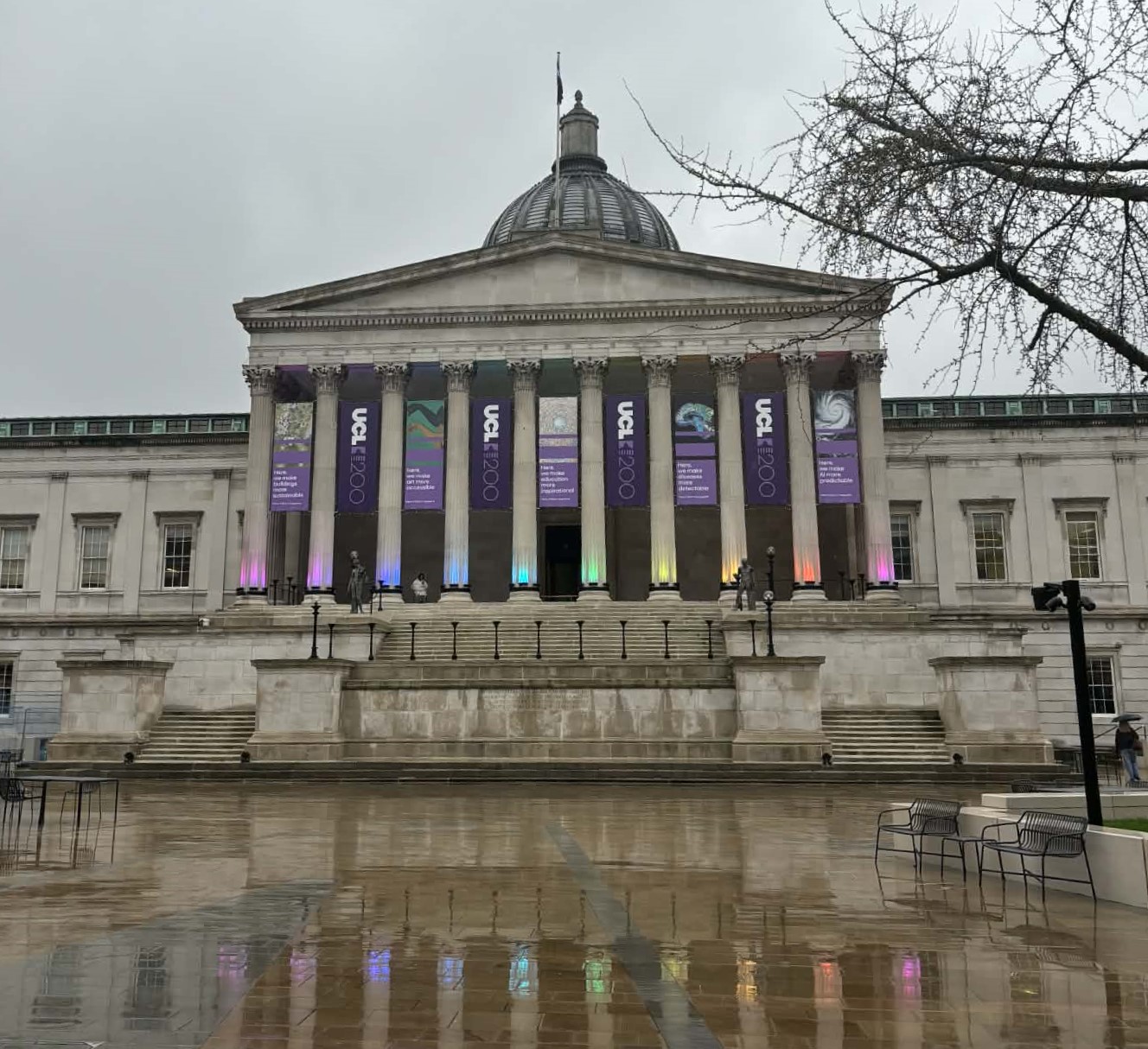
From there, we made our way to UCL for the meeting. Arriving at the main building was striking in itself—the recent renovations, combined with the coloured floodlights, gave it a sense of occasion. Although we were daunted by the prospect fo finding our way through its labyrinthine interior to locate the meeting room, we quickly found our way.
The meeting itself offered a fascinating glimpse into how the Society operates behind the scenes. As a relatively new council member, I found myself taking a more observational role. I stayed fairly quiet, consciously so, wanting first to understand the dynamics of discussion, decision-making, and responsibility before stepping in more actively. There’s a particular kind of learning that comes from listening, especially in a room filled with scholars whose work has shaped the field in meaningful ways.
Following the meeting, we were treated to a lecture by Alexandra Sanmark from the University of the Highlands and Islands, who spoke about Viking archaeological sites in Scandinavia. The talk was engaging and thought-provoking, opening up new ways of thinking about spatial organisation, ritual, and landscape in the Viking world. What struck me most, however, was the discussion that followed—insightful, generous, and full of genuinely interesting questions from the audience.
Afterwards, we adjourned to the staff room at UCL, where the more informal side of academic life took over. With pints or coffees in hand, conversations continued—less structured, perhaps, but no less valuable. These moments, often overlooked, are where connections are built and ideas begin to take shape in unexpected ways.
The evening concluded with a swift dinner at Prezzo, a slightly more grounded but no less enjoyable end to the day. Soon after, it was time to head back to Nottingham. The train journey was quiet, the kind that allows space for reflection after a full day.
I’m very glad I made the trip.
 Bodies and Being