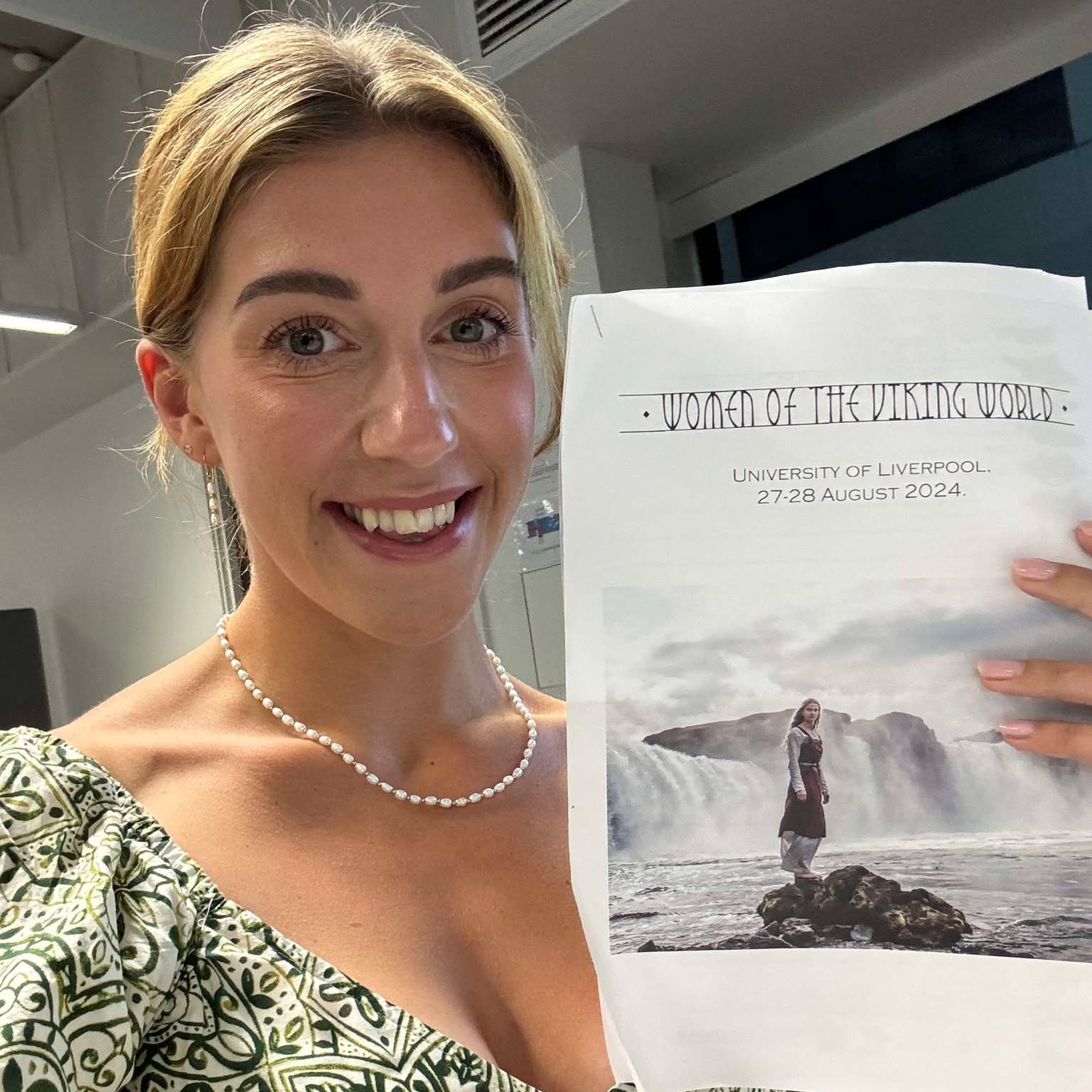
This August, I had the privilege of attending the inaugural Women of the Viking World conference at the University of Liverpool. As I reflect on my first year as a PhD student, this event stands out as a highlight—not only for its fascinating research but for the inspiring sense of community it fostered among scholars.
The conference, the first of its kind, was an ambitious undertaking, and it exceeded all expectations. While its focus leaned heavily toward archaeology, I found its interdisciplinary nature deeply enriching as a literary scholar. Listening to presentations about Viking settlements, powerful women leaders, and the material culture of the Viking world offered me fresh perspectives to consider in my own work. The sessions on identity and emotion were particularly engaging, and I was honored to contribute with my paper, Beastly Minds: Animalism in the Prophetic Dreams of Women in Völsunga Saga.
One of the things I appreciated most was the warmth and openness of the research community. As a first-year PhD student, stepping into academic spaces can sometimes feel daunting. However, the collegiality at this conference—whether during Q&A sessions, over coffee breaks, or in lively lunchtime discussions—was invigorating. The diverse array of attendees, from established experts to early-career researchers, made it a welcoming environment for all.
I also found myself inspired by the breadth of topics covered. From discussions on female hierarchies in Viking domestic spaces to analyses of powerful women like Aud the Deep-Minded, the conference showcased the dynamic and multifaceted roles of women in the Viking world. Each paper contributed a piece to the larger puzzle of understanding how gender, power, and identity intersected in this period.
The keynote lecture by Dr. Charlotte Hedenstierna-Jonson, All the Different Women, was a fitting centerpiece for the event. Her insights on the multiplicity of women’s experiences in the Viking Age reminded us of the complexity and richness of the past—and the responsibility we have as scholars to honor that complexity in our work.
As I eagerly await the publication of the full conference proceedings, I’m also filled with hope that this marks the beginning of an ongoing series. The organizers did a phenomenal job, and I would love to see this conference become a regular fixture in the academic calendar.
In the meantime, I’ll carry the inspiration and connections from Women of the Viking World into my own research and future conferences. For anyone considering attending or presenting at this conference in the future: do it. You’ll not only engage with cutting-edge research but also become part of a vibrant and supportive scholarly community.
 Bodies and Being